
Sarkhej Roza
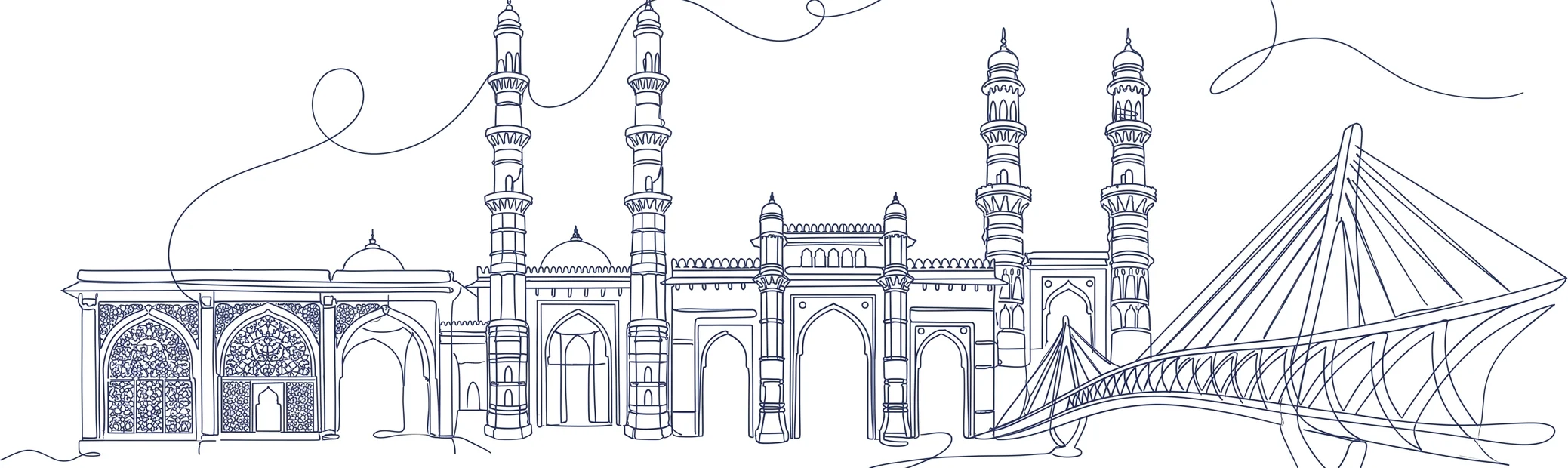
A fifteenth century complex of mosque, tomb and palace around a tank, its long facade screened in carved stone lattice.
Host city
India’s first UNESCO World Heritage City, inscribed in 2017, and home to one of the country’s major centres for transplantation, training and research.
The walled city is a fifteen minute drive from the riverfront, and most of what follows sits within it or just across the water.
A fifteenth century complex of mosque, tomb and palace around a tank, its long facade screened in carved stone lattice.
Built in 1499 by a woman of the royal household, five storeys of octagonal landings cut down to the groundwater.
Push one minaret of Sidi Bashir and the other answers. How the sixteenth century builders managed it is still argued over.
White marble raised in 1848 by a merchant family, carved courtyard shrines ringing the central sanctuary.
The triple gateway onto the royal square, standing since 1415 and still the way into the market streets behind it.
The citadel Ahmed Shah laid out in 1411 when he founded the city, now the anchor of the walled city's heritage walk.
Ten kilometres of reclaimed embankment on both banks, with promenades, gardens and steps down to the water.
Ahmedabad is home to the Institute of Kidney Diseases and Research Centre and Dr H L Trivedi Institute of Transplantation Sciences (IKDRC-ITS), a major Indian centre for transplantation, training and research. Gujarat’s transplant experience is a large part of why the congress is being held here, and it puts the host faculty within reach of every delegate attending.
Sardar Vallabhbhai Patel International Airport provides domestic and international access, complemented by connections through major Indian aviation hubs, which supports delegates travelling from neighbouring countries, Southeast Asia and the Gulf. Recommended hotels, transfers and the visa letter process are published with the venue.